
In construction, we live by change orders—but we die by them too.
A project can be perfectly planned, coordinated to the hour, and fully bought out—and then one unexpected change knocks the whole system off balance. Sometimes it’s a simple client request. Other times, it’s a conflict in the field. Either way, the damage isn’t in the request—it’s in how unprepared the team is to assess it.
That’s where chaos takes root.
In the world of Construction Chaos Theory, we don’t pretend we can prevent change. Instead, we recognize it as one of the most dangerous—yet inevitable—forces on a project. And we treat it accordingly. That’s why one of the core principles of this theory is simple:
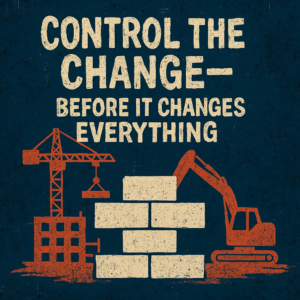
“Control the Change—Before It Changes Everything.”
The idea is straightforward, but its application takes discipline. Because the issue isn’t just what is being proposed—the issue is what else it will impact. Costs, yes. Schedule, sure. But also the chain reaction that change might trigger across the field, the team, the contract, and the end user.
🚧 Real-World Example: A Flooring Change That Cost More Than Money
Imagine a commercial office project, 60% through construction. The original finish plans called for ¼-inch thick VCT flooring. But during interior design review, the client decided they preferred a luxury vinyl plank (LVP) system with a ¾-inch overall thickness.
Seems harmless. Aesthetic upgrade. Same general material. Contractor quotes the cost difference—just a few thousand dollars. The client approves.
But no one evaluated the change beyond the surface.
- Doors didn’t close properly—floor height raised finish elevations.
- Thresholds became trip hazards.
- Cabinet bases no longer aligned.
- HVAC vents and wall bases needed adjustment.
- Time was lost coordinating trades who thought they were done.
The $3,000 upgrade snowballed into over $25,000 in ripple costs, delayed the move-in, and shook client confidence. This wasn’t just a bad decision—it was a rushed one.
That’s what happens when you don’t control the change—before it changes everything.
🔍 The Strength Behind the Principle
The strength of this principle lies in its refusal to treat change like a checkbox. Most construction teams are trained to move quickly—solve problems, keep things flowing, keep the crew busy. And on a good day, that’s what makes us efficient.
But on a chaotic day, that same urgency becomes our weakness.
Change without evaluation isn’t management—it’s roulette.
When you rush a decision, you borrow risk from the future. Maybe you absorb it. Maybe someone else eats it later. Either way, it creates instability that someone eventually pays for—in time, cost, credibility, or quality.
Controlling the change doesn’t mean dragging out the process. It means pausing long enough to ask the hard questions:
- Will this improve the project?
- What is the timing cost?
- Is this solving the right problem—or creating new ones?
This principle helps construction managers stop reacting—and start leading. Not by saying “no” to change, but by saying “yes” with purpose.
That’s what separates a firefighter from a builder. One extinguishes chaos. The other prevents it.
🧩 The Five Categories of the Scope Change Evaluation Tool
Each proposed change should be evaluated using these five lenses:
💰 Financial Impact
Not just what it costs now, but what it saves—or costs—later.
- Return on investment (ROI)
- Present vs. future value of money
- Contingency health and available budget
📅 Schedule Impact
Time is money. But sometimes time is trust.
- Critical path delays or float erosion
- Risk of milestone slippage or LD exposure
- Effort required for resequencing and reapprovals
⚙️ Operational Value
Don’t just build it—build it to work.
- Impact on long-term maintainability and performance
- Startup and commissioning implications
- Usability for O&M and end users
🎯 Strategic Alignment
The best change fits the big picture.
- Does it support the Owner’s long-term vision?
- Will deferring it create more work—or political fallout?
- Does it solve a problem now or just shift it downstream?
⚠️ Risk Profile
Sometimes the real cost is hidden in coordination chaos.
- Constructability issues and safety concerns
- Disruption to other trades or sequences
- Likelihood of rework, field errors, or confusion
🧭 From Change Order to Informed Decision
The most dangerous changes aren’t the expensive ones. They’re the ones that slip through because “it’s just a quick revision.” The principle of controlling the change puts the power back in the manager’s hands—not to resist change, but to own it.
Control doesn’t mean say no.
It means say yes for the right reasons—at the right time—after evaluating the full impact.
We’ll be diving deeper into each of these five evaluation categories in future posts, with tools and examples to help you embed this thinking into your everyday workflow.
📬 Subscribe at www.chaosinconstruction.com to get early access to the beta version of the Scope Change Evaluation Tool—and take the first step toward controlling change, before it controls your project.
Discover more from Chaos in Construction
Subscribe to get the latest posts sent to your email.