
What Makes a Team High-Performing?
High-performing teams don’t just hit deadlines—they solve problems before they become problems. They move fast without cutting corners, communicate without second-guessing, and share a sense of ownership that transcends roles or titles.
In construction, that means:
- Field crews trust the drawings—and the person who issued them
- Designers understand sequencing, not just aesthetics
- The owner’s rep, commissioning agent, engineer, and contractor operate with mutual visibility
- Everyone has access to the same truth—even if they see it from different angles
High-performing teams are interconnected. Not just accountable to their own tasks, but aware of how their work impacts others. They succeed not because they avoid chaos, but because they’re equipped to manage it—together.
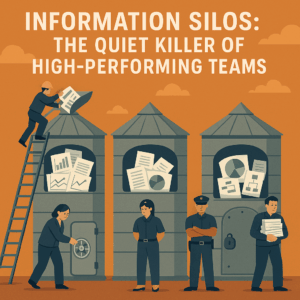
The Silent Disruptor: Information Silos
Now imagine a project team that looks productive from the outside. Everyone’s busy. Meetings are happening. Emails are flying. But something’s off.
- The field doesn’t hear about the design revision until rebar is tied
- The contractor never gets a copy of the startup plan until the final week
- The commissioning team finds out about scope changes from the punchlist walk
- The owner’s rep knows there was a delay—but not the real reason behind it
This isn’t laziness or disorganization. It’s siloing.
Information silos occur when decisions, documents, or discussions are held in isolation—intentionally or unintentionally—by individuals or departments who fail to share them broadly.
It’s not always malicious. But the impact is the same: disconnection, distrust, and disorder.
The Tactics Behind the Behavior
Silos often form under the banner of “efficiency” or “focus.” A few common justifications include:
- “It’s easier to just tell them directly.”
- “No need to involve others—it doesn’t affect them.”
- “Let’s wait until it’s final before sharing it.”
- “If I control the information, I control the narrative.”
That last one is key. Sometimes, silos are created by those who want to appear indispensable. They don’t hoard information out of necessity—they hoard it to maintain leverage.
What Happens When Silos Take Over
You don’t need to label someone a “gatekeeper” to see the damage. You’ll feel it:
- Stakeholders show up to meetings unprepared or uninformed
- Rework happens because of missed context or outdated plans
- Teams duplicate effort because they don’t know someone else already started it
- Risk isn’t flagged because someone noticed it—but didn’t share it
- Morale drops as people feel excluded or undercut
The Cultural Cost: Trust Erodes First
When silos exist, people begin to lose trust—not just in the process, but in each other. They wonder:
- Who else knew about this?
- Why wasn’t I told?
- Am I being left out on purpose?
- What else am I missing?
Even the most well-oiled team will fracture. Collaboration becomes cautious. Meetings become defensive. Communication becomes political. The longer it goes unchecked, the harder it is to repair.
Breaking the Silo Mentality
Before you can fix siloed behavior, ask yourself this: Does everyone on the team have the same map? The “map” means shared access to the schedule logic, scope updates, risks, and decisions that shape the project. If one person holds a different version—or no version at all—they’re going to make wrong turns. They’ll miss critical paths, misunderstand priorities, or duplicate someone else’s work. High-performing teams don’t just move fast—they move together, following the same map.
To restore clarity and trust, leaders must model and enforce open communication practices that reinforce shared awareness. Here’s how:
- Start with structure: define where updates are stored, who’s responsible, and when they’re shared.
- Summarize critical 1:1 conversations: recap them in shared spaces or meeting logs.
- Ask, “Who else needs to know this?” to make inclusion routine.
- Challenge exclusivity respectfully: ask why something can’t be shared sooner.
- Reward visibility, not control: celebrate those who create clarity, not mystique.
Information Should Flow, Not Pool
Think of your team like a jobsite with poor drainage. When one area holds water, it slows everything down. But when flow is continuous, issues are absorbed and carried downstream before they cause damage.
Information works the same way. The longer it pools in one person’s inbox, conversation, or memory, the higher the risk to the project and the team.
Final Thought: High-Performing Teams Share the Map
There’s a difference between being in control and being helpful. One hoards. The other supports.
If you want to build a high-performing team, start by asking: Does everyone have the same map?
If not, someone’s gatekeeping the path—and it’s only a matter of time before the team starts walking in circles.
🔗 Continue Learning
Explore more real-world strategies for managing construction chaos at chaosinconstruction.com
Discover more from Chaos in Construction
Subscribe to get the latest posts sent to your email.


Leave a Reply