
📊 Why Construction Projects Need Meetings to Stay on Track
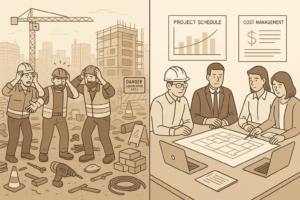
In construction, no two days are the same. Crews change, subs rotate, conditions shift—and decisions that were right on Monday can be wrong by Wednesday. This constant motion breeds chaos if it’s not managed deliberately.
Project meetings offer a rhythm to this disorder. They create:
- Consistent communication channels
- Shared understanding of priorities
- Dedicated space to flag and resolve issues
- Documentation that protects everyone
Without regular, focused meetings, teams fall into reactive mode. And that’s when errors multiply, costs spiral, and blame starts flying.
🧩 Types of Project Meetings That Bring Order to the Chaos
1. Progress Meetings (Weekly or Biweekly)
The backbone of project oversight. These meetings typically include the GC, key subs, and the owner or CM.
What they cover:
- 3-week look-ahead schedules
- Delays and recovery plans
- RFI/submittal status
- Safety, access, and logistics
- Budget/schedule impacts
Goal: Keep the big picture visible and everyone accountable.
2. Coordination Meetings (Trade-Specific)
Often needed during critical phases—like HVAC rough-ins, utility crossings, or final finishes—these are hyper-focused meetings with the relevant players.
Goal: Resolve technical conflicts before they hit the field.
3. Pre-Activity or Pre-Installation Meetings
Held before any new major work begins. These meetings align expectations and ensure compliance with specs, submittals, and logistics.
Goal: Prevent rework and clarify the plan for field crews.
4. Owner/User/Commissioning Meetings
These meetings loop in the people who will actually operate and maintain the systems once the project is done. They’re separate from construction meetings for good reason.
Goal: Ensure Operational Readiness at turnover.
5. Ad Hoc Problem-Solving Meetings
Scheduled on demand to deal with a sudden issue—conflicts in scope, field conditions, or a failed inspection.
Goal: Resolve issues before they grow and ripple.
📏 My Rule of Thumb: Meeting Frequency Reflects Project Health
Here’s a practical rule I use to determine if a meeting series is working:
If your meeting is scheduled for an hour and it consistently takes an hour, you’re meeting at the right frequency.
– If it always runs over, increase the frequency.
– If it consistently ends early, decrease the frequency.
This guideline helps you strike the balance between “not enough communication” and “death by meeting.”
🚫 When Meetings Become Noise
Not all meetings are productive. If you’re not careful, meetings can become just another form of chaos.
Watch out for these warning signs:
- No agenda, no focus
- The same issue shows up week after week
- Key decision-makers are missing
- Action items don’t get tracked or closed
- Meetings are held “just because they’re scheduled”
🧭 Final Takeaway: Meetings Are Your Chaos Filter
The best construction managers don’t avoid chaos—they control it. And project meetings are one of the most effective tools for doing just that.
Use them to:
- Create rhythm in a reactive world
- Expose risks before they hit the schedule
- Align field crews with the project’s goals
- Build trust between trades, owners, and O&M staff
In the end, a well-run meeting is like a well-placed beam: invisible when it’s doing its job, but absolutely critical when things start to shift.
💬 What Do You Think?
Have you found project meetings to be helpful—or a hassle? Drop your thoughts in the comments below. Let’s talk shop.
👉 Want more insight into controlling construction chaos?
Visit chaosinconstruction.com to explore more articles and resources built for real-world builders like you.
Discover more from Chaos in Construction
Subscribe to get the latest posts sent to your email.
Leave a Reply