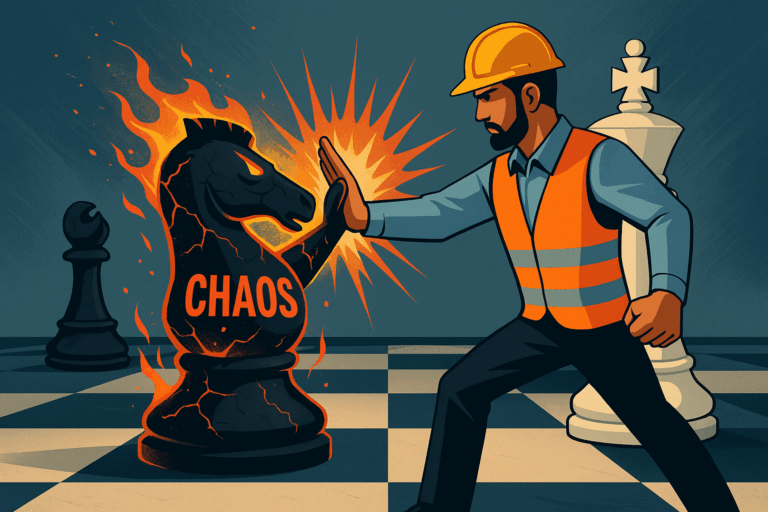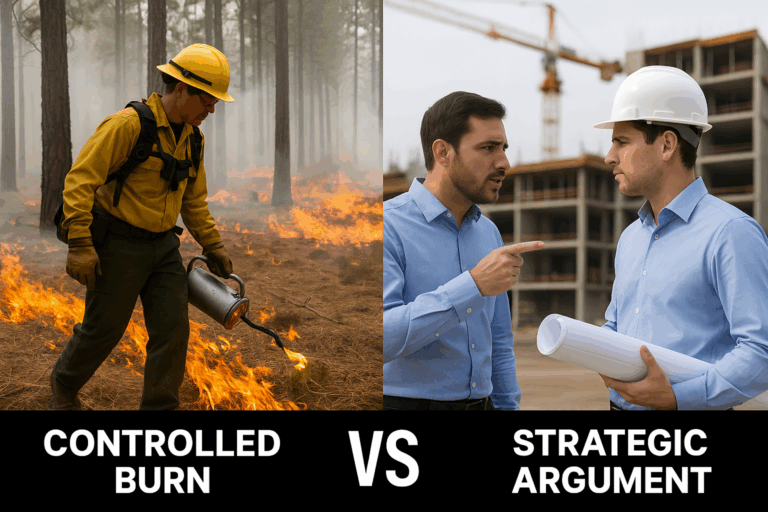

Construction projects don’t fail overnight. They unravel slowly — one skipped step, one ignored role, one side conversation at a time. And almost every time, the breakdown starts when people stop following the chain of command.
At its core, the chain of command is not bureaucracy — it’s protection. It protects the project, the people, and the process from the chaos that inevitably creeps into the jobsite when decisions are made without clarity or authority.
🔗 What Is the Chain of Command?
The chain of command is the defined line of authority in an organization or project. It lays out who reports to whom, how decisions flow, and where responsibilities begin and end.
In construction, this usually includes:
- The Owner (or Owner’s Representative)
- The Construction Manager
- The Engineer of Record
- The General Contractor
- Subcontractors
- Field Personnel
It also includes support roles like commissioning agents, inspectors, and O&M leads — all of whom must operate within clearly defined scopes and authority levels.
🧭 Why It Matters in the Field
Think of the chain of command as a GPS for communication and decision-making. Without it, you’re just wandering.
Here’s what happens when the structure holds:
- The GC submits an RFI through proper channels.
- The Construction Manager reviews and forwards it to the design engineer.
- The engineer responds with clarity, which gets relayed back down to the field.
- Everyone builds with confidence.
Now imagine what happens when someone shortcuts that system:
- A subcontractor calls the engineer directly to clarify a detail.
- The engineer casually gives verbal direction — without notifying the CM.
- Work is done based on that conversation.
- Later, the Owner disputes payment, and no one can track where the direction came from.
That’s not just confusion — that’s legal exposure, schedule impact, and lost trust.
🛠️ How to Define It on Your Project
1. Start With a Visual Org Chart
Include it in your preconstruction kickoff materials. Make sure every contractor, sub, and stakeholder knows who to go to for questions, changes, or direction.
2. Write It Into Procedures
Embed the chain of command into your:
- Communication Protocols
- RFI/Submittal Workflows
- Meeting Agendas
- Field Directives
If someone gives direction outside the chain, it should be obvious that it’s a violation of process.
3. Clarify Escalation Paths
Every project should answer these three questions clearly:
- Who gives direction on field work?
- Who approves changes to cost or scope?
- Who decides when the project is “done”?
If multiple people think they have the same authority, you’re inviting chaos before the job even starts.
🚨 Signs the Chain Is Breaking Down
Here’s how you know the chain of command is being ignored:
- Designers talking directly to subs
- Operations staff giving direction without looping in Construction
- Engineers bypassing the CM to “help move things along”
- Contractors working off verbal approvals instead of documented changes
- Emails that CC everyone but address no one specifically
These behaviors seem minor — even helpful — in the moment. But they slowly erode the project’s structure until no one knows who’s really in charge anymore.
⚠️ Real-World Consequences
Here’s a scenario that happened on a major facility upgrade project:
Operations staff held a side meeting with the electrical subcontractor to review their typical equipment startup and operational procedures. They assumed they were just “being helpful.” But no one informed the Construction Manager — who was supposed to coordinate all testing and commissioning per contract.
Later, when that piece of equipment failed, the contractor blamed O&M training them incorrectly. But operations wasn’t contractually supposed to train the contractor, it was actually the other way around. And the engineer claimed the system wasn’t installed per their spec. The CM was blindsided — and the Owner looked to them for answers.
One side conversation — outside the chain — created weeks of dispute, delay, and finger-pointing.
🧱 Enforcing the Chain: Without Sounding Like a Bureaucrat
🔁 Reiterate in Meetings
Say things like:
“Let’s make sure that gets routed through the CM before it goes to the engineer.”
“That’s a good point — let’s get that into the official RFI system so it’s on record.”
🛑 Redirect Side Conversations
If someone goes around you, address it with:
“For documentation and clarity, we need to route that back through proper channels.”
📝 Document the Breaches
Keep track of when and how the chain is broken. This isn’t tattling — it’s risk management. You’ll thank yourself later when you’re sorting out liability on a disputed change order.
🔄 When to Update the Chain
Chains of command aren’t static — they need to evolve with the project.
- When a project transitions to startup/commissioning
- When key team members leave or get replaced
- When scope shifts (e.g., design-build elements added midstream)
Reissue the org chart. Update communication expectations. Reconfirm who makes final calls. Otherwise, people default to what’s easiest — not what’s right.
🔚 Closing Thought: Clarity Prevents Chaos
Every project lives in tension between structure and disorder.
You can’t eliminate conflict, delay, or confusion. But you can build a framework that keeps them contained. That framework is the chain of command.
The moment people abandon it — in the name of speed, convenience, or “just helping out” — they invite disruption, rework, and conflict.
Your job as a leader isn’t to control people — it’s to protect the process that keeps things clear, fair, and moving forward.
Because when the chain holds, so does the project.
📎 Read More at: chaosinconstruction.com
Discover more from Chaos in Construction
Subscribe to get the latest posts sent to your email.